DGIOB Academy
The DGIOB qualification path.
From basic knowledge to quality-assured clinical application – and from there to scientific expertise. The qualification path combines clinical training, practical experience, and scientific excellence.
Principles
What is documented – and what is not.
Orthobiological procedures such as PRP, adipose tissue and bone marrow have become common practice in many clinics. The DGIOB curriculum teaches how preparations are made, how they are measured and safely administered – and how well the evidence is actually for each indication.
For whom
physicians who use or wish to use orthobiological procedures, as well as medical assistants, physician assistants, healthcare assistants and other support staff. We train the team, not just the doctor.
How
Online, at your own pace, with lectures, practical videos, animations, and a progress control after each module. Each module has been reviewed and approved by the board of DGIOB; the curriculum is updated annually.
Six evidence labels
Every statement in the course shows what it is based on. The label evaluates the origin of a statement, not its accuracy. Negative studies are shown just as much as positive ones.
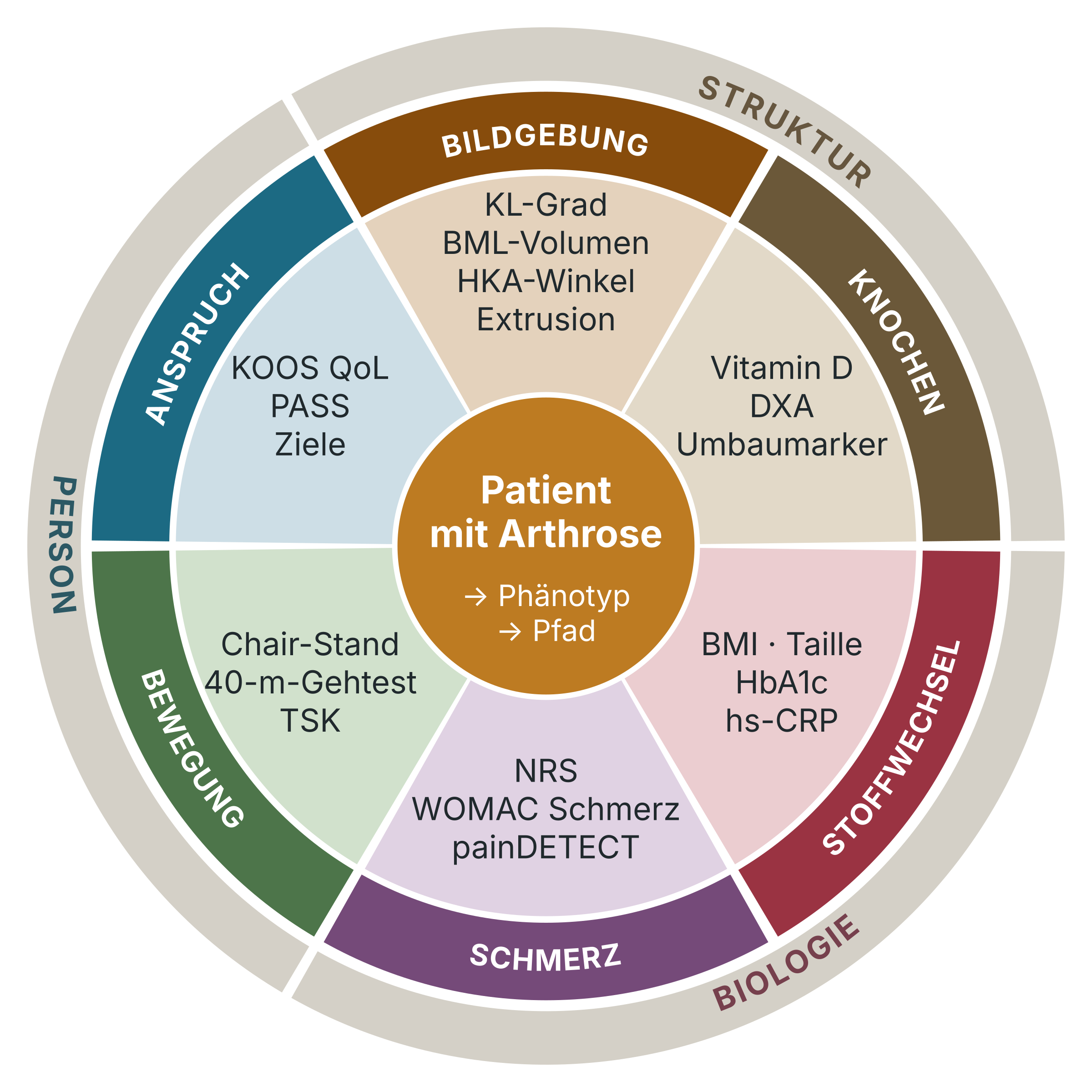
The osteoarthritis wheel
Arthritis is an illness of the entire joint and of the entire person. The Arthrose Rad organizes six domains in which diagnosis, clarification, and treatment are based.
Neutral in the evaluation, transparent in examples. The devices shown are marked as examples; conflicts of interest are disclosed in each module.
Levels and certificates
Three levels for physicians, two for assisting professions.
Level model
Orthobiology curriculum of the DGIOB · each level is valid for three years
Physicians
Assistant professions
| Level | Requirements |
|---|---|
| OrthoBio CertifiedLevel 1 | All learning assessments required for the country of practice passed; licence to practise, liability insurance, registration of procedures, experience with PRP; in addition, at least one of the following: 25 patients in the PROM registry, a publication on orthobiology, or participation in a consensus group |
| OrthoBio ProfessionalLevel 2 | 50 patients in the registry; image control and cell counting mandatory; two focus areas, including highly concentrated PRP |
| OrthoBio ExpertLevel 3 | 100 patients in the registry; image control and cell counting; four focus areas, including highly concentrated PRP |
| COBAAssistant, Level 1 | Certified OrthoBio Assistance: Online Level 1 Course with passing assessment tests |
| COBA PROAssistant, Level 2 | Focus on highly concentrated plasma; First aid or emergency course, no older than two years; Training in the cell counter |
| OrthobiologicumCentre of Excellence | At least two doctors, one of whom is at level 2; at least two assistants, one of whom is equipped with COBA PRO; highly concentrated PRP with its own measurement |
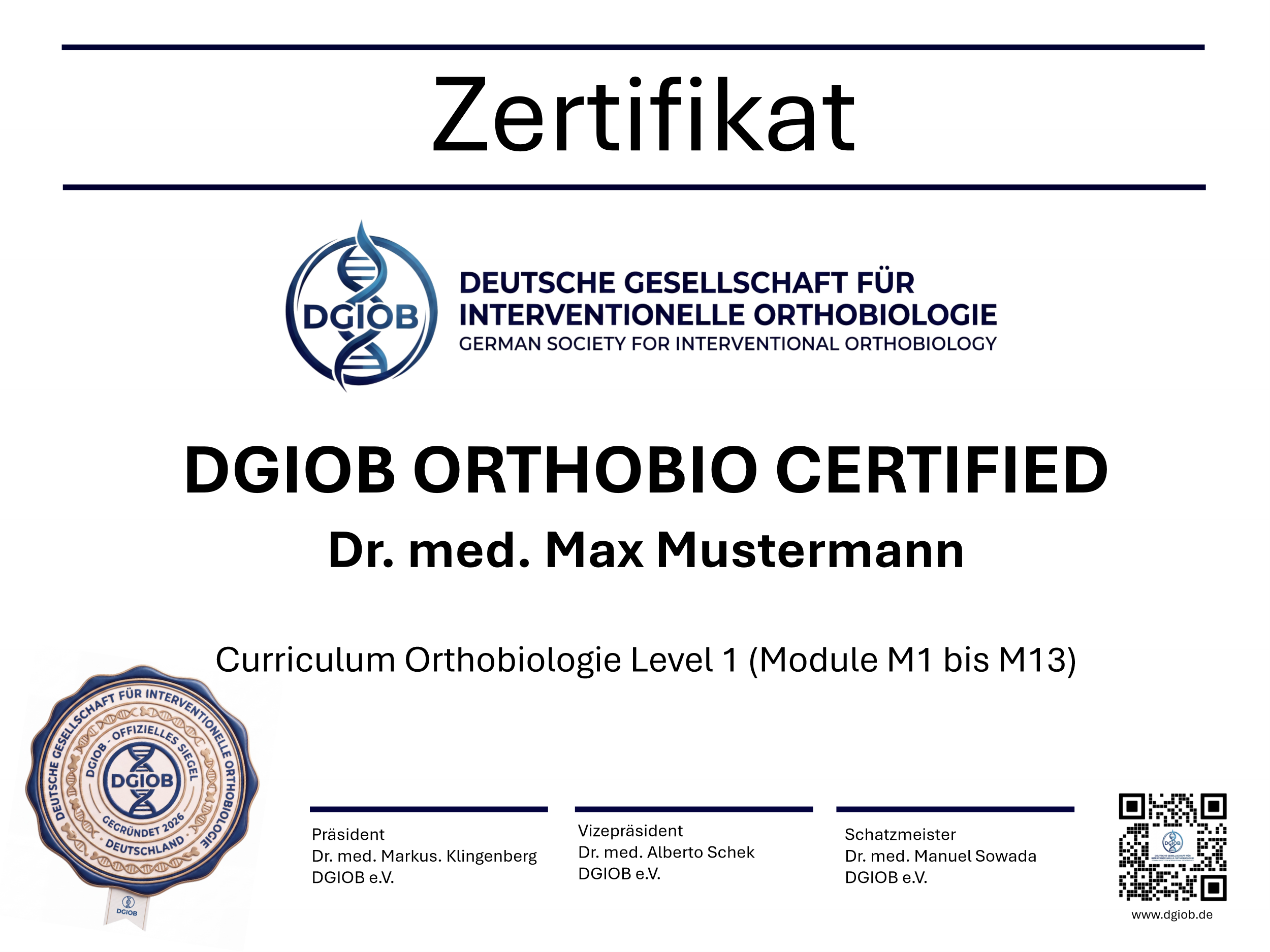
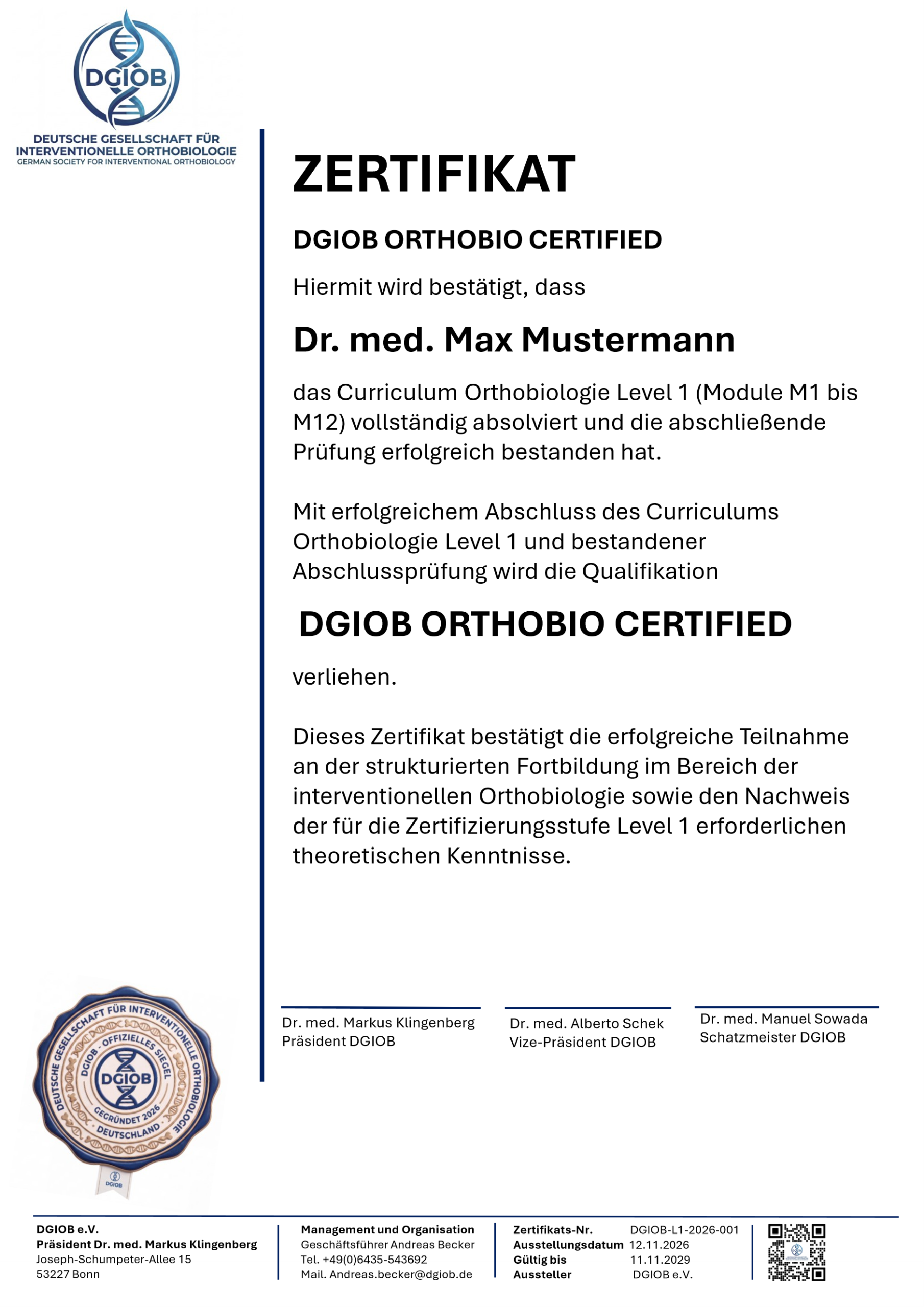
Each level is valid for three years. Upon certification, you will receive a certificate, the DGIOB seal, and a door plaque.
Level 1 · Online course
13 modules, one path.
Approximately 11 hours of learning time in 14 learning units. Each module ends with a learning success check; the next module is unlocked after passing.
| Module | Content and learning objectives | Duration |
|---|---|---|
| M0 | Introduction: Reading the evidenceRecognize levels of evidence; distinguish between significance and clinical relevance; classify conflicting studies | 30 minutes |
| M1 | Basics: Osteoarthritis, Osteoarthritis wheel, BiologyOsteoarthritis as a disease of the entire joint; phenotypes; principles of action; guiding principles | 55 minutes |
| M2 | Framework conditions DE, AT, CHLegal framework varies by country; information, costs, delegation, data protection | 45 minutes |
| M3 | Imaging and image-guided injectionAccuracy of injection; Asepsis; Access to knees, hips and small joints; Documentation | 55 minutes |
| M4 | PRPProduction, composition, dosage and measurement; guidelines and consensus; joints outside the knee | 75 minutes |
| M5 | Fat tissue and bone marrowMechanical pathways without enzymes; extraction; cell count; evidence per system | 65 minutes |
| M6 | Intraosseous therapyBone marrow lesions; differential diagnosis; treatment manager; evidence | 40 minutes |
| M7 | Patient pathSelection, expectation, information, follow-up, PROM | 65 minutes |
| M8 | Perioperative useUse before, during, and after operations; evidence per indication | 30 minutes |
| M9 | Case synthesisStructured processing of typical cases | 65 minutes |
| M10 | Tendon and muscleTendinopathy; evidence per tendon; volume; doping | 45 minutes |
| M11 | SpineAssuring the source of pain; guidelines; evidence including cervical spine | 30 minutes |
| M12 | Patient safety and complication managementMisdiagnosis, incorrect application, infection, local anaesthetics, sedation; emergency algorithm | 45 minutes |
| Total | 645 minutes |
Overview of the learning path
13 modules, one way: The video shows in just over a minute how the curriculum is structured and how the evidence is organized in each module.
Process
Learn, be assessed, get certified.
Learning assessment
After each module, there are multiple-choice questions with five answer options, randomly drawn from over 290 questions. Pass required with 70% correct answers; repetition is possible.
Languages
German, English and French. You choose the language during registration, regardless of your country.
Legal module for your country of practice
Module 2 covers Germany, Austria and Switzerland; you answer only the questions about your own country. Participants from other countries skip Module 2 and check their own national legal situation themselves. The certificate is the same in both cases.
Your companion: Mrs. K.
A fictional patient accompanies you through all the modules – from diagnosis to the preparation of the product and follow-up care. This way, each lesson is anchored in a specific case.
Honestly about the evidence
Each module concludes with an overview of the evidence in an Ampel format: green, yellow, red or gray. The colors are a course assessment, not a guideline recommendation – and they openly state where the data is sparse or contradictory.
The goal
Upon successful completion of the learning success checks and the proof of compliance with the certification regulations, the DGIOB awards the qualification OrthoBio Certified – visible with a certificate, seal and door plaque, valid for three years.
Level 2 and 3
Specialise in eight focus areas.
Online theory in modules of 45 minutes each with learning success control; alternatively, case studies, webinars, and congress participation are recognized. You acquire the practical skills in clinical observerships or in DGIOB and recognized external courses.
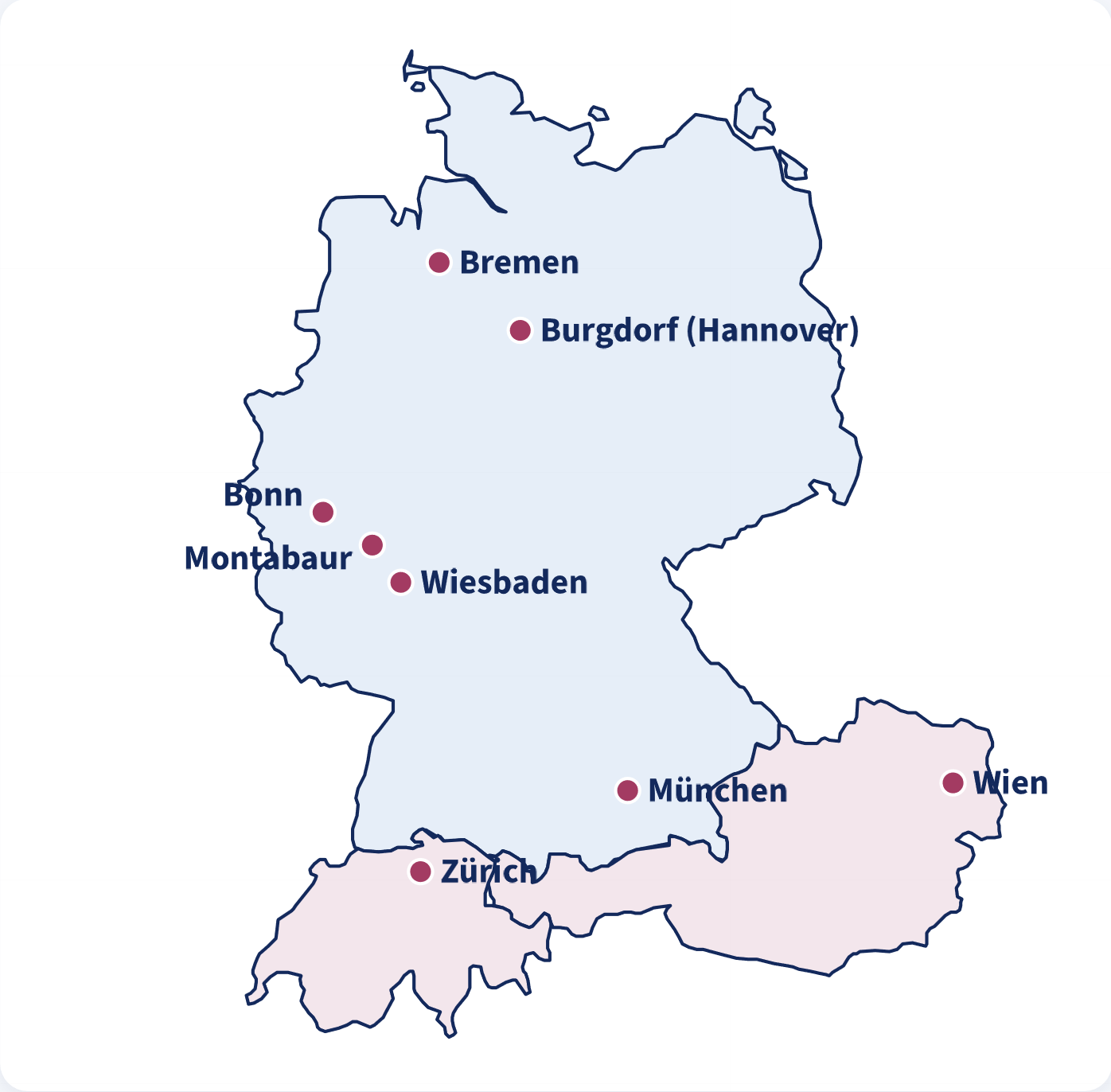
Clinical observership in the practice
For board members, committee chairpersons and members at level 3 – currently in eight locations in Germany, Austria and Switzerland.
Bremen · Burgdorf (near Hanover) · Bonn · Montabaur · Wiesbaden · Munich · Zurich · Vienna
As of 2026; the list will be expanded.
Quality
We make the quality of our treatment visible.
Certified physicians document their cases using patient questionnaires in the common PROM register of the DGIOB.
Recertification after three years
| Level | Documented patients within three years | of which at least with 1 year of follow-up |
|---|---|---|
| OrthoBio Certified | 50 | 25 |
| OrthoBio Professional | 100 | 50 |
| OrthoBio Expert | 150 | 75 |
Updated annually
New studies, guidelines and legal regulations are published once a year.
Updates via newsletter
Graduates receive the updates regularly.
Valid for three years
Afterwards, recertification via the register.
The three pillars of DGIOB
Continuing education
DGIOB Academy, OrthoBio Curriculum, Masterclasses, Hands-on Workshops, Clinical observerships, Webinars
Research
Evidence database, clinical studies, multicenter data collection, PROMs, guidelines and consensus papers
Quality assurance
Orthobiologicum, QM manual and SOPs, treatment standards, patient education and safety
Participation
Start January 2027.
Participation
The curriculum is open exclusively to members of the DGIOB. Membership is available for physicians and other supporting professions.
Cost Level 1
Physicians: 975 €
Assistant professions: 395 €
Continuing education points
The curriculum is a qualification of the DGIOB for its members and is continuously updated. CME points are therefore not requested.
Lectures
A digital avatar of the scientific director delivers the lectures; the practical videos come from the day-to-day practice.
Disclosure of interests
Scientific leadership: Dr. med. Markus Klingenberg, specialist in orthopaedics and sports medicine, President of the DGIOB. Consultant contracts with Arthrex (Senior Medical Consultant Orthobiology; lead of a study funded by Arthrex), Jointechlabs, Geistlich and Plasmaconcept. The conflicts of interest are disclosed in each module; all modules have been reviewed by the board of the DGIOB.
Contact and registration
This page describes the curriculum; it does not replace a medical evaluation and does not contain statements about the effectiveness of individual treatments.
FAQ
Frequently asked questions about the curriculum.
General
Who is the curriculum for?
For physicians who use or wish to use orthobiological procedures, and for medical assistants, physician assistants, healthcare assistants, and other medical support professions. We train the team, not just the doctor.
Who can participate?
The curriculum is open exclusively to members of the DGIOB. Membership is available for physicians and other supporting professions.
What does participation cost?
Level 1 costs 975 € for physicians and 395 € for medical assistant professions.
When does it start?
The launch is scheduled for January 2027.
In which languages is the curriculum offered?
In German, English and French. You choose the language during registration, regardless of your country.
Which countries does the legal module cover?
Module 2 covers the legal situation in Germany, Austria and Switzerland. If you indicate which of these countries you are applying to, Module 2 will process the questions about your country. Participants from other countries skip Module 2 and are given a hint to check the national legal situation themselves. The certificate is the same in both cases.
Are there CME points?
No. The curriculum is a qualification of the DGIOB for its members and is continuously updated. CME recognition would require a course for all physicians and would make every change of content notifiable. We have therefore decided against it.
Construction and procedure
How is the curriculum structured?
In three levels for physicians and two levels for assistant positions. Level 1 is an online course with 13 modules (M0 to M12), practice videos, and a progress control after each module. Levels 2 and 3 deepen in specific areas, with online theory and practical training in an clinical observership or course.
How long does Level 1 take?
Approximately 11 hours of pure learning time in 14 learning units. You learn at your own pace.
What topics does Level 1 cover?
Proper reading of the evidence, fundamentals of osteoarthritis and biology, legal framework in Germany, Austria and Switzerland, imaging and image-guided injection, PRP, adipose tissue and bone marrow, intraosseous therapy, patient pathway, perioperative application, case synthesis, tendon and muscle, spine, as well as patient safety and complication management.
How is learning assessed?
After each module, you answer multiple-choice questions with five answer options, drawn randomly from a pool of over 290 questions. Passing is based on 70% correct answers; repetition is possible.
Who holds the lectures?
A digital avatar of the scientific director delivers the lectures; the practical videos come from the day-to-day practice.
Is the curriculum manufacturer-independent?
The evaluation is neutral: Each statement carries an evidence label; negative studies are shown just as much as positive ones. The devices shown are marked as examples; conflicts of interest are disclosed in each module. Each module has been reviewed and approved by the board of the DGIOB.
Levels and certificates
Which levels are there for physicians?
Level 1: OrthoBio Certified. Level 2: OrthoBio Professional. Level 3: OrthoBio Expert.
What requirements apply for OrthoBio Certified (Level 1)?
All learning assessments required for your country of practice passed: licence to practise, adequate liability insurance, registration of the procedures used and experience with PRP. Additionally, at least one of the following: 25 patients in the DGIOB PROM registry, a publication on orthobiology as an author or co-author, or participation in a consensus group.
What distinguishes OrthoBio Professional and OrthoBio Expert?
OrthoBio Professional (Level 2) requires 50 patients in the registry, image control, cell counting, and two focus areas, including highly concentrated PRP. OrthoBio Expert (Level 3) requires 100 patients and four focus areas, also with highly concentrated PRP.
Which focus areas are there?
Eight: Highly concentrated PRP, adipose tissue (SVF, MFAT), bone marrow (BMAC), intraosseous therapy, peri- and intraoperative use, spinal column, muscle and tendon, and image control. There is a dedicated masterclass for highly concentrated PRP.
Where do the clinical observerships take place?
For board members, committee chairpersons and members at level 3: currently in Bremen, Burgdorf (near Hanover), Bonn, Montabaur, Wiesbaden and Munich, as well as in Zurich and Vienna (as of 2026). Alternatively, a DGIOB course or a recognized external course will be counted towards completion.
Which levels are there for assisting professions?
Level 1: Certified OrthoBio Assistance (COBA) after passing the online course. Level 2: Certified OrthoBio Assistance PRO (COBA PRO) with a focus on high-concentration plasma, an emergency first aid or emergency course that is no more than two years old, and training in the cell counter.
What is an orthobiologicum?
A center certified by the DGIOB, a Centre of Excellence: at least two physicians, one of whom is at level 2 (OrthoBio Professional), at least two support staff, one of whom is with COBA PRO, and highly concentrated PRP with its own measurement.
What do I receive after the certification?
Certificate, DGIOB seal and door plaque.
How long is a certificate valid?
Each level is valid for three years; after that comes the recertification.
Quality and timeliness
What is the PROM register about?
We make the quality of our treatment visible. Certified doctors document their cases using patient questionnaires in the DGIOB’s shared PROM register. For recertification, this means 50 (level 1), 100 (level 2) and 150 (level 3) patients within three years, with half of them having at least one year of follow-up.
How do I stay up-to-date?
The curriculum is not static: it is adapted annually to new studies, guidelines, and legal developments. Graduates receive the updates regularly via a newsletter.
Questions about the curriculum: kontakt@dgiob.de · www.dgiob.de
Join us
Become part of DGIOB.
Members benefit from the Academy and the entire network.
Become a member