Orthobiology
What is interventional orthobiology?
Orthobiological procedures rely on the body's own regenerative forces.
Brief explanation
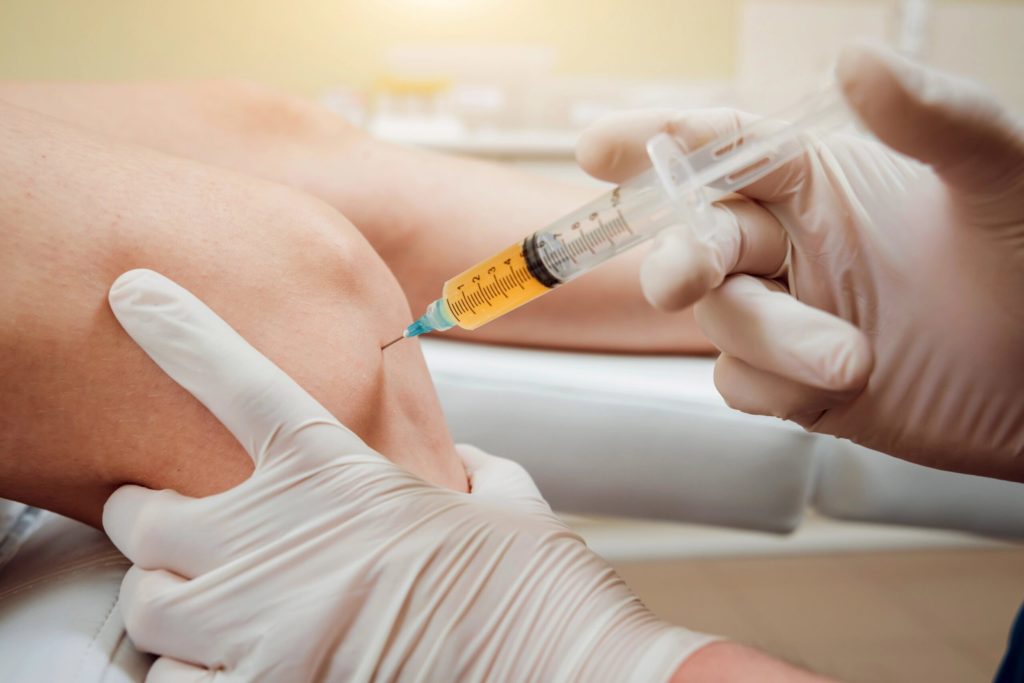
Healing with the body's own resources.
Instead of synthetic medications or surgical procedures, biological preparations extracted from the patient's blood are used and specifically injected into damaged tissues.
The goal is to stimulate the body's healing processes, for example in the case of arthritis, tendon diseases or cartilage damage. Interventional orthobiology thus lies between conservative and surgical medicine.
Procedure
The most important orthobiological procedures.
PRP
Platelet-rich plasma
Plasma from the patient's own blood, rich in growth factors.
PRF
Platelet-rich fibrin
The body’s own matrix, for example as a membrane.
BMC
Bone marrow concentrate
Concentrate with different cell populations and growth factors.
SVF
Stromal Vascular Fraction
Cell-based procedure using adipose tissue.
GF
Growth factors
Messenger substances that support cell multiplication and tissue formation.
Learn more
From overview to qualification.
In the Orthobiology curriculum, the DGIOB provides the biological fundamentals, application, and evidence in 13 online modules. Start January 2027.
To the curriculum